





Tempered glass
Tempered glass (sometimes referred to as toughened glass) is a type of safety glass that, when it breaks, shatters into small, relatively even pieces that do not have sharp edges. It can also withstand moderate heat.
It is used in situations where large shards of broken glass could cause a hazard, such as in shower doors, frameless glass doors, phone booths, mobile phone screen protectors, diving masks, and car side windows, or in situations where heat may be present, such as in fireplaces.
It is manufactured by a process of extreme heating and rapid cooling, or by a chemical toughening process, that induces compressive stresses in the surface of the glass and tensile stresses in the body of the glass. The internal portion of the glass remain fluid for longer than the outer surfaces during the manufacturing process. This means that an equal amount of tensile and compressive stresses are formed across the glass which allows it to become in the order of four times as strong as annealed glass.
Heat soaked tempered glass may be used in safety critical situations, such as glass railings. Tempered glass panes are heated to a temperature of around 550 degrees Fahrenheit for a few hours. This causes any unstable nickel sulfide inclusions (imperfections that may cause spontaneous breakage of the pane) to expand disproportionately to the glass, making the glass break. Only glass that has not broken is then used.
[edit] Related articles on Designing Buildings Wiki
Featured articles
Check out some of the best features and news from Designing Buildings as well as key stories from around the web.
Building Regulations and Building Safety Act
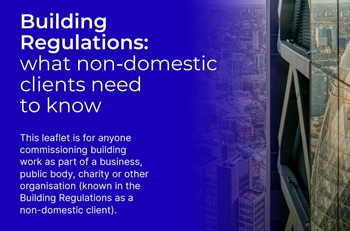
CIOB publishes free advice for non-domestic clients.

Building Safety Newsletter from MHCLG.

An extraordinary record of steel engineering worldwide.
Households living near new pylons to save on bills.

ECA warns growth must not outpace grid capacity or skills.
The role of the client and decision making

CIOB response to built environment professions call for evidence.
Construction's sustainability reporting revolution
Tracking upfront embodied carbon with digital tools.
ECA welcomes procurement reforms

Public spending must back British jobs and skills.
Campaigning for Edinburgh: the Cockburn Association 1875-2049

The role of the civic voice in protecting character. Book review.

CIOB photography competition is open for entries.
ECA Edmundson apprentice of the year award
Finalists announced.
Major new study exposes serious knowledge gaps.